Composite vs. Wood Decking: What Actually Holds Up in a Maine Backyard
A Materials Comparison for Homeowners Building or Replacing a Deck in Southern Maine
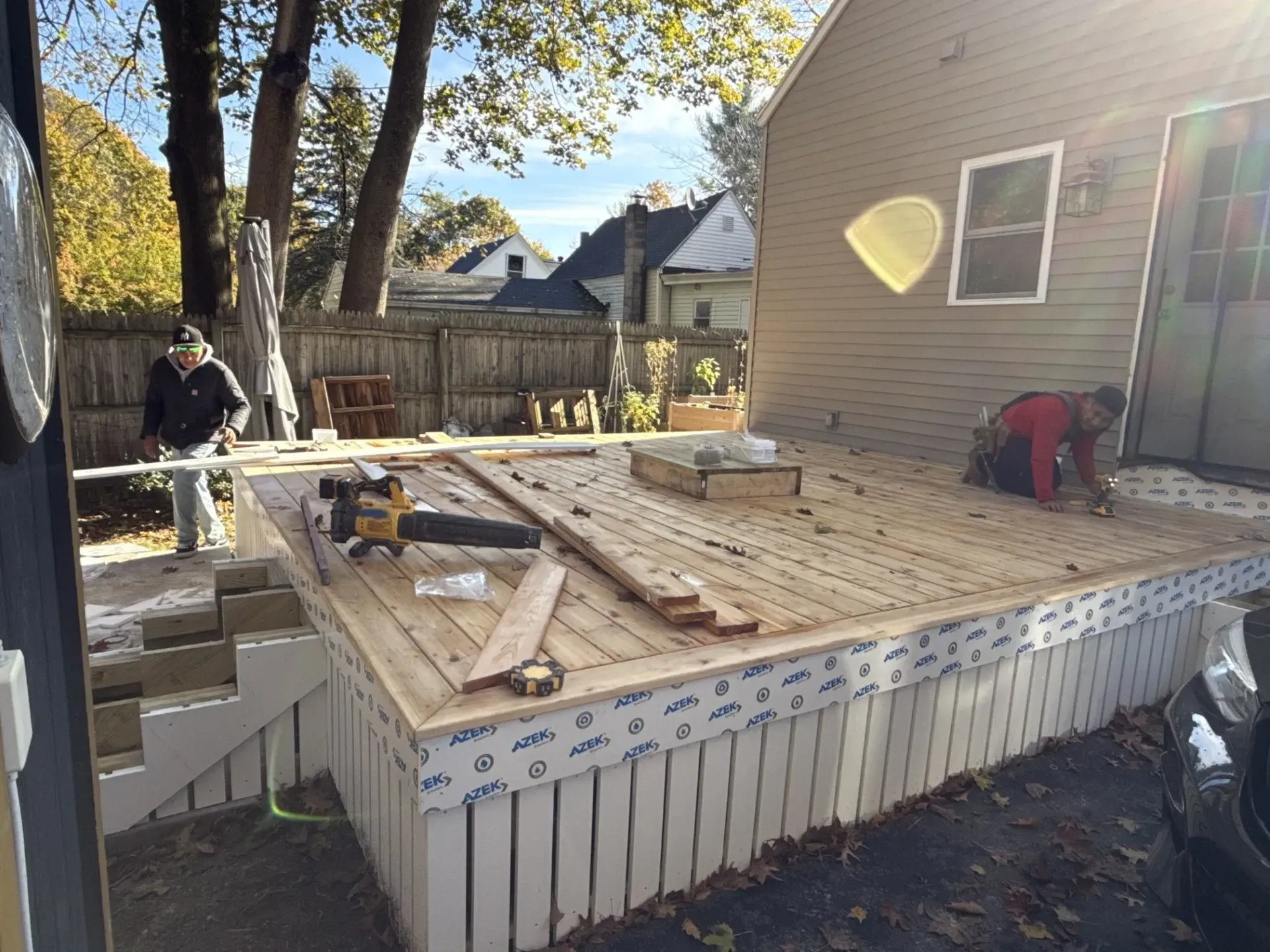
If you're planning a new deck or replacing a tired one, the material decision usually comes down to one question: wood or composite? Both can look great, and both can hold up for years — but "hold up" means something different in Portland, Maine, than it does in a warmer, drier climate. Between freeze-thaw cycles, heavy snow loads, humidity, and salt-tinged coastal air, a Maine backyard puts real stress on a deck that a manufacturer's brochure photo never shows.
We build both wood and composite decks for homeowners throughout Portland, Scarborough, Cape Elizabeth, Falmouth, and the surrounding communities, and the honest answer is that there's no universally "right" choice — there's a right choice for your budget, your maintenance tolerance, and how long you plan to stay in the house. Here's what actually matters.
How Maine's Climate Stresses a Deck
Before comparing materials, it helps to know what they're up against here specifically:
- Freeze-thaw cycles. Southern Maine sees repeated freezing and thawing through late fall, winter, and early spring. Any moisture that gets into a board's surface or fastener holes can expand as it freezes, which is one of the main drivers of splitting, cracking, and warping over time.
- Snow load and shoveling. Decks carry snow weight for months at a time, and metal shovels or ice scrapers can gouge softer wood surfaces or chip away at a board's protective coating.
- Humidity and rot risk. Maine's damp spring and fall conditions create ongoing rot and mildew risk for any wood surface that isn't properly sealed and maintained.
- Coastal salt air. For homes closer to the coast, airborne salt accelerates corrosion of fasteners and hardware and can degrade some finishes faster than inland conditions would.
Every decking material handles these stresses differently, which is where the comparison actually starts.
Wood Decking: Pressure-Treated vs. Cedar
Pressure-treated pine is the most common and most affordable decking material, chemically treated to resist rot and insect damage. It performs reasonably well in Maine when properly maintained, but it isn't maintenance-free: the wood itself can still warp, crack, and splinter over time as it repeatedly absorbs and releases moisture through the seasons. Typical installed costs run about $20–$35 per square foot, and a well-maintained pressure-treated deck generally lasts 10 to 20 years, with lifespan heavily dependent on how consistently it's cleaned and resealed.
Cedar costs more upfront than pressure-treated pine but offers naturally better resistance to rot and insects, along with a warmer look many homeowners prefer. It still requires regular staining or sealing to hold up against Maine's freeze-thaw and moisture cycles and typically lasts 15–20 years with proper care.
Wood maintenance, realistically: Plan on restaining or resealing every one to three years, annual cleaning or pressure washing, periodic sanding of any splintering areas, and a spring inspection for soft or rotting boards after winter. Skipping a season or two of maintenance is usually where wood decks start to age faster than expected.
Composite Decking
Composite decking is manufactured from a blend of wood fibers and recycled plastic, typically finished with a protective cap layer. It's engineered to resist the things that age wood decks—moisture absorption, splintering, warping, and insect damage—which is part of why it tends to perform consistently well through New England winters.
Composite installed costs typically run higher than wood, generally in the range of $25–$60 per square foot depending on the product line and board profile, but it comes with a meaningfully longer expected lifespan — commonly cited in the 25–30+ year range from manufacturers — and dramatically lower maintenance: periodic soap-and-water cleaning, with no staining, sealing, or sanding required.
The tradeoff is upfront cost and, for some homeowners, a preference for the look and feel of real wood, which composite approximates but doesn't fully replicate.
The Real Comparison: Total Cost, Not Just Sticker Price
Comparing wood and composite purely on installed price per square foot misses the bigger picture. Over a 15–20 year window, wood decking's ongoing costs — restaining, sealing, cleaning, and eventual board replacement — add up, often narrowing or erasing the upfront price gap with composite. Composite's higher initial cost is offset by essentially eliminating those recurring expenses and by a longer service life before replacement is needed at all.
The right way to think about it: wood asks for a lower initial investment and an ongoing time-and-money commitment; composite asks for a higher initial investment and very little afterward. Neither is objectively "cheaper" — it depends on whether you'd rather pay more now or more over time (and whether you're the type of homeowner who will actually keep up with a resealing schedule).
Which One Makes Sense for You
A few questions worth asking yourself:
- How long do you plan to stay in this home? If it's a shorter-term hold, wood's lower upfront cost may make more sense. If you're planning to stay long-term, composite's durability and low maintenance often pay off.
- Are you realistic about maintenance? Wood decking that isn't resealed on schedule ages faster than the estimates above. If yearly maintenance isn't something you'll prioritize, composite removes that risk entirely.
- What's your budget structure? If you'd rather spread cost over time in smaller maintenance expenses, wood fits that. If you'd rather pay once and be largely done, composite fits that.
- Does resale value matter to you? Both materials can add value; composite is often viewed favorably by buyers specifically because of its low-maintenance reputation, while a well-kept wood deck with a natural look also appeals to many buyers.
Why Installation Quality Matters as Much as Material Choice
Whichever material you choose, how a deck is built affects how well it survives a Maine winter just as much as what it's built from. That includes footings set below the frost line so the structure doesn't heave, proper ledger board flashing to prevent water intrusion where the deck meets the house, adequate joist spacing for snow load, and corrosion-resistant, coastal-rated fasteners and hardware for homes near salt air. A premium composite board installed on an undersized frame with the wrong fasteners will still fail prematurely — the structure underneath matters as much as the surface on top.
Getting Started
If you're weighing wood against composite for a new deck or a replacement, the right next step is a site visit—your deck's size, exposure, and how you use the space all factor into which material and which specific product line make sense for your budget. We can walk you through samples of both and give you a straightforward cost comparison based on your actual project, not a generic estimate.
Frequently Asked Questions
Is composite decking really worth the higher upfront cost in Maine? For most homeowners planning to stay in their home long-term, yes — composite's longer lifespan and minimal maintenance typically offset the higher installed cost over a 15- to 20-year period. If you're looking for the lowest possible upfront cost or a shorter-term solution, pressure-treated wood may make more sense.
Does composite decking get slippery with snow and ice like some claim? Most modern composite boards have a textured, capped surface designed to resist slipperiness even when wet or icy, similar to sealed wood. As with any deck material, clear snow and ice with a plastic shovel rather than metal to avoid scratching the surface.
How often does a wood deck need to be resealed in Maine's climate? Generally every one to three years, depending on sun exposure and how much wear the deck gets. Decks with more direct sun or heavier foot traffic typically need resealing on the more frequent end of that range.
Can I install composite decking on my existing deck's frame? In many cases, you can reuse the existing substructure if it's structurally sound and properly spaced for composite board requirements, but it should be inspected first—composite has different span and fastening requirements than wood, and old framing sized for wood decking doesn't always meet those requirements without modification.
Which material handles coastal salt air better? Composite decking's cap layer resists the surface effects of salt air better than untreated wood, but for either material, the bigger salt-air vulnerability is usually the fasteners and hardware. Coastal installations should use stainless steel or coastal-rated fasteners regardless of decking material.