Is Your Roof Ready for a Maine Winter? What to Check Before the Snow Flies
A Fall Roof Inspection Guide for Homeowners in Portland and Southern Maine
By the time a roof problem shows up as a stain on your ceiling or an ice dam hanging off your gutter, the damage usually started months earlier—often as small, easy-to-miss wear that sat in plain sight all fall. In Southern Maine, where a roof has to shed heavy snow loads, survive repeated freeze-thaw cycles, and hold up against coastal wind off the Gulf of Maine, the gap between "looks fine from the ground" and "needs immediate attention" can close fast once winter sets in.
We install and repair roofs for homeowners throughout Portland, South Portland, Scarborough, Cape Elizabeth, Falmouth, Westbrook, Gorham, and surrounding communities, and fall is when we most often see roofs that quietly deteriorated all year finally get looked at. Here's what's worth checking now, and why waiting until winter almost always makes any roof problem more expensive to fix.
Why Fall Is the Right Time for Roof Work in Maine
Roofing work is more weather-dependent than most homeowners realize. Asphalt shingles need a minimum temperature to seal properly — install them when it's too cold, and the adhesive strips won't bond as designed, leaving a new roof vulnerable to wind uplift. That effectively limits ideal roofing conditions to roughly spring through late fall, with fall offering mild temperatures, lower humidity, and (usually) a break before the first real snow.
Fall also matters for a more practical reason: contractor schedules fill up fast once the first cold snap or an ice dam sends a wave of homeowners looking for emergency help. Scheduling an inspection or replacement in fall means you're addressing a problem on your timeline, not during a leak, with crews who aren't stretched across a dozen emergency calls at once.
Signs Your Roof Needs Attention Before Winter
A roof rarely fails all at once — it gives warning signs first. Worth checking (or having a professional check) before the weather turns:
- Missing, curling, or cracked shingles. Shingles that lift at the edges or visibly cup have lost flexibility and are more likely to blow off or let water in during winter storms.
- Granule loss. Bare or balding patches on asphalt shingles, or an unusual amount of granules collecting in gutters, signal that the shingle's protective layer is wearing thin.
- Damaged or aging flashing. The metal flashing around chimneys, vent pipes, and skylights is one of the most common places roofs actually leak — not the shingle field itself. Rusted, lifted, or improperly sealed flashing is worth flagging.
- Sagging areas. Any dip or soft spot in the roofline can indicate structural or decking issues underneath and should be evaluated promptly, not left for spring.
- Daylight or water stains in the attic. Pinpoints of daylight through the roof deck, damp insulation, or ceiling stains inside the home can show water is already getting in somewhere.
- Moss, algae, or heavy debris buildup. These hold moisture against the shingle surface longer than it should sit, accelerating wear, particularly on shaded, north-facing slopes common on wooded Maine lots.
- Last winter's ice dam history. If you dealt with an ice dam last year, that's not a one-time weather event — it's usually a sign of a ventilation or insulation issue that will happen again unless it's addressed.
Understanding Ice Dams — and Why They Start Inside the Attic, Not on the Roof
Ice dams are one of the most common winter roof problems in Southern Maine, and homeowners often assume they're purely a snow-and-gutter issue. In reality, most ice dams start with heat escaping from the living space into the attic. That warm air unevenly heats the underside of the roof deck, melting snow on the upper roof while the eaves stay cold. The meltwater runs down, refreezes at the colder eave, and builds into a dam that backs water up under the shingles.
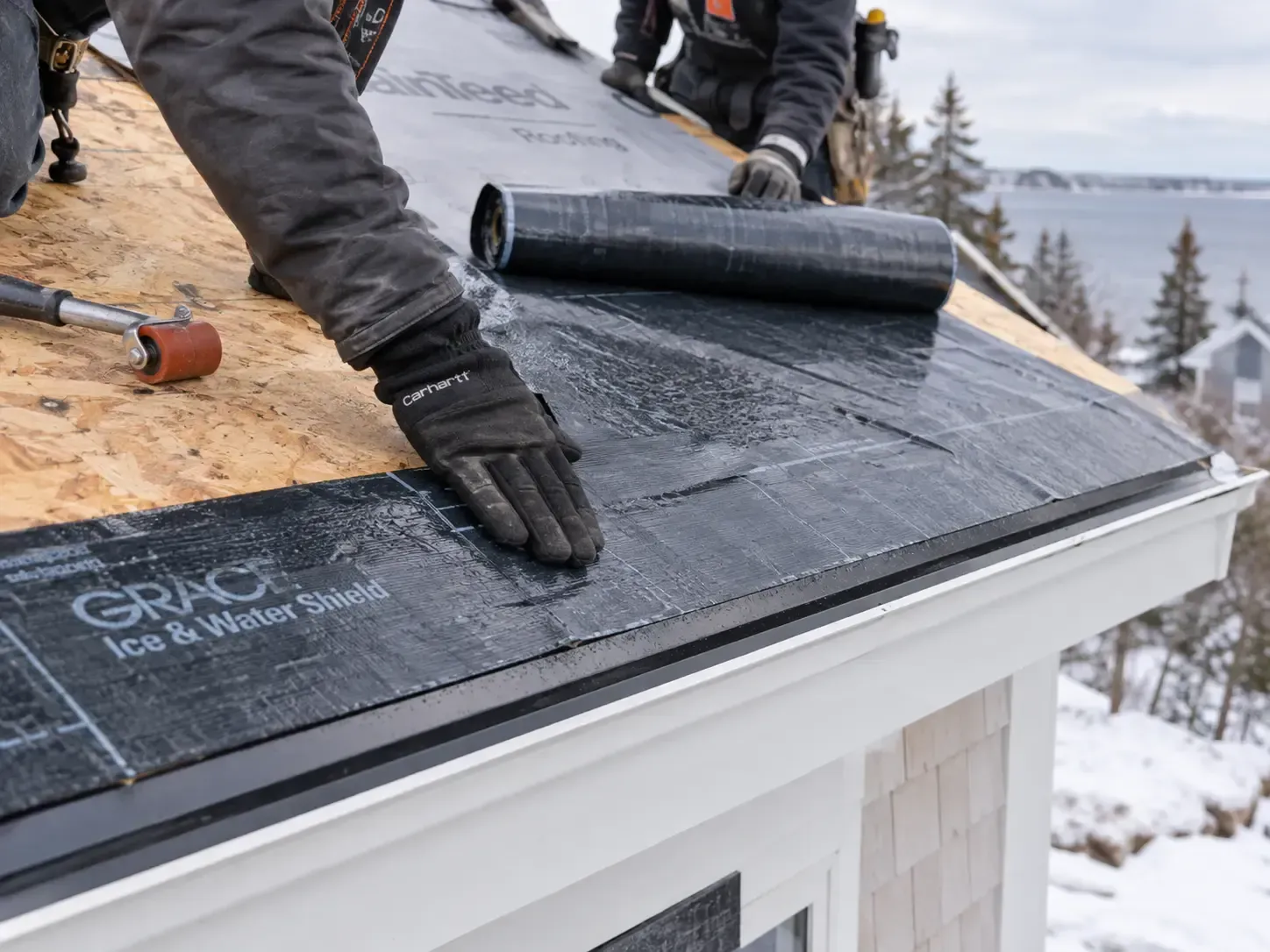
The fix isn't just clearing gutters — it's addressing the imbalance that causes the melt in the first place: proper attic insulation to keep heat where it belongs, balanced ridge-and-soffit ventilation to keep the whole roof deck at a consistent temperature, and an ice-and-water shield membrane installed along the eaves and in valleys during roofing work as a last line of defense. A roof replacement is the most straightforward time to get all three of these right at once, rather than treating ice dams as an annual inconvenience.
Roof Replacement vs. Repair: How to Know Which You Need
Not every issue means a full replacement. A localized leak around a single flashing point, a handful of storm-damaged shingles, or an isolated soft spot can often be repaired without touching the rest of the roof. Full replacement generally makes more sense when:
- The roof is near or past its expected lifespan. Standard asphalt shingle roofs typically last 20–25 years for architectural (dimensional) shingles and 15–20 years for older 3-tab shingles; metal roofing commonly runs 40–70 years depending on the system.
- Wear is widespread rather than isolated. Granule loss, curling, or flashing issues across multiple areas of the roof usually point to the whole roofing system aging out together, not a one-off problem.
- You've had repeated leaks or ice dams. Patching the same area more than once, or dealing with ice dams year after year, is often a sign the underlying roof system — not just the surface — needs to be addressed.
- You're planning other exterior work. If siding, gutters, or an addition are also on the table, it's often more cost-effective to sequence roofing work alongside it rather than as a separate project later.
A roofer should be able to tell you honestly which category your roof falls into after an on-site look — not a photo from the ground or a drive-by estimate.
Material Options for a Maine Roof
Architectural asphalt shingles remain the most common choice for Southern Maine homes, offering a strong balance of cost, appearance, and performance, with wind ratings and cold-weather sealing strips well suited to New England conditions.
Metal roofing (standing seam being the most common residential option) sheds snow more effectively than shingles, which reduces sustained snow load but does mean snow can slide off in sheets — something to plan for near walkways, decks, and entries. Metal roofing typically costs more upfront but lasts longer and requires less long-term maintenance.
Synthetic and composite roofing products, designed to mimic slate or wood shake, offer a different aesthetic with better impact and weather resistance than natural versions of those materials, at a mid-to-upper price point.
The right material depends on your roof's pitch, your home's style, how long you plan to stay, and how much you want to spend upfront versus over time — the same trade-off that comes up with most exterior material decisions.
What Goes Into a Proper Roof Replacement (Beyond the Shingles)
The shingles are the most visible part of a roof, but they're not the only thing determining how it performs through a Maine winter. A properly done replacement also includes ice-and-water shield membrane along eaves and valleys, synthetic underlayment across the full deck, correctly balanced ridge and soffit ventilation, new flashing at every chimney, vent, and skylight rather than reusing old flashing, a drip edge along all roof edges, and a fastening pattern rated for the wind exposure of your specific site. A premium shingle installed without these details will still underperform — the systems underneath the surface are what actually keep water and ice out.
Cost and Timeline Expectations
Roofing costs vary based on square footage, pitch, material, and how much of the decking (if any) needs to be replaced, so we don't quote a project without seeing the roof. As general reference points, asphalt shingle replacement in this region typically runs in the range of $450–$1,100 per roofing "square" (100 square feet) installed, while metal roofing generally runs higher, often in the $900–$2,000+ per square range depending on the system. Most residential roof replacements are completed in one to three days, weather permitting, though steep pitches, multiple layers of old roofing to remove, or extensive decking repair can extend that timeline.
Getting Started
If it's been a few years since your roof was last looked at — or if last winter left you with an ice dam, a leak, or a nagging feeling something wasn't right — a fall inspection is the lowest-pressure way to find out where things stand. We'll give you a straightforward assessment of what's repair-worthy, what's nearing the end of its life, and what a replacement would realistically cost for your specific roof, before winter makes the decision for you.
Frequently Asked Questions
How do I know if I need a roof repair or a full replacement? Isolated damage — a single leak, a handful of damaged shingles, or one problem flashing point — can often be repaired. Widespread granule loss, curling across multiple areas, a roof near or past its expected lifespan, or repeated leaks and ice dams typically point to full replacement being the more cost-effective long-term option.
What causes ice dams, and how do I prevent them? Ice dams form when heat escapes into the attic, melting snow on the upper roof, which then refreezes at the colder eaves. Prevention comes down to proper attic insulation, balanced ridge-and-soffit ventilation, and an ice-and-water shield membrane along the eaves — addressing the heat loss, not just the ice itself.
How long does a roof replacement take? Most residential roof replacements take one to three days, depending on the roof's size, pitch, how many layers of old roofing need to be removed, and whether any decking needs replacement.
Can roofing work be done once it's cold or snowing? It's possible, but not ideal. Asphalt shingles need a minimum temperature to seal properly, and cold-weather installations can take longer and cost more due to limited scheduling availability. Fall installation avoids both issues.
How often should I have my roof inspected? An annual inspection, ideally in fall before winter weather arrives, is a reasonable standard for most homes — or sooner if you notice missing shingles, granule buildup in gutters, ceiling stains, or had an ice dam the previous winter.